Robotic Arm Laser Cladding Machine: An Advanced Solution for Surface Engineering
Product Overview
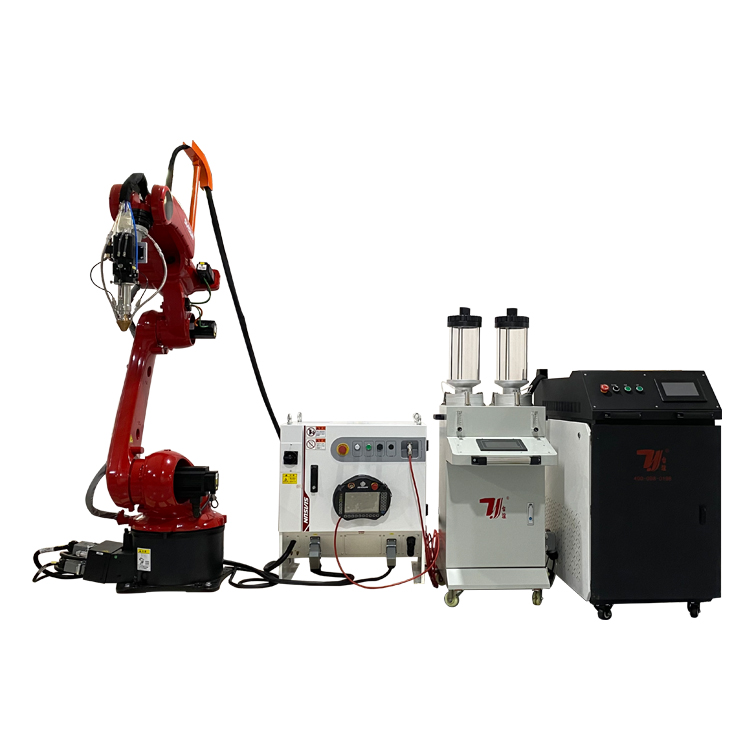
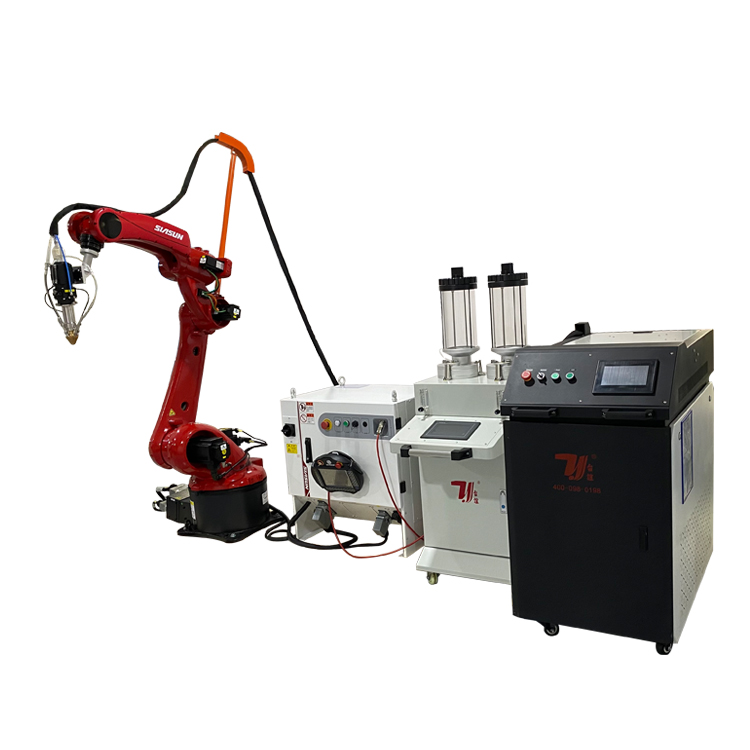
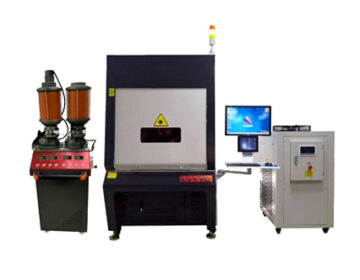
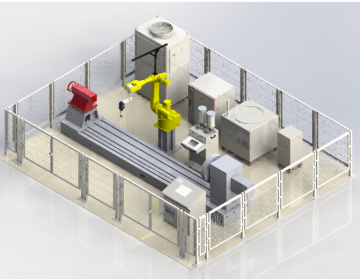
Our Robotic Arm Laser Cladding Machine represents a significant leap forward in laser additive manufacturing, surface engineering, and component repair. This integrated system utilizes a high-precision, multi-axis industrial robotic arm as its core motion system, working in conjunction with a high-power laser and advanced powder feed system. It is designed to create a dense, metallurgically bonded coating on the surfaces of new or damaged metal components, significantly enhancing their performance characteristics and service life.
This configuration offers unparalleled flexibility, allowing for the processing of complex geometries and irregular parts that are challenging for traditional CNC machine-based systems. The equipment is a turnkey solution for industries seeking to implement high-quality, automated, and green manufacturing processes for repair, restoration, and surface strengthening applications.
Key Features & Advantages
The Robotic Arm Laser Cladding Machine is engineered for performance, reliability, and ease of use. Its standout features and benefits include:
- High Flexibility and Complex Geometry Processing: The multi-axis robotic arm (often 6-axis or more), combined with a turntable or positioner, creates a system with 7 or 8 axes of motion . This multi-axis linkage allows the laser cladding head to maintain an optimal angle relative to the workpiece surface, enabling high-quality cladding on complex contours, irregular surfaces, and internal bores .
- Superior Cladding Quality: The system features precise control over the laser energy, ensuring the dilution rate of the cladding layer is maintained below 3%. This results in a fine, dense microstructure with excellent metallurgical bonding. The use of specialized nozzles, including high-speed variants, provides a large cladding width with effective overlap and a high surfaceevenness .
- High Efficiency and Cost-Effectiveness: The process achieves high deposition rates, with some systems capable of depositing material at speeds up to 6 kg/h. Advanced systems like high-speed laser cladding (EHLA) can achieve surface coverage rates of 7-1.0 m²/h, tripling the efficiency of traditional methods. Combined with a high powder material utilization rate of over 90%, this significantly reduces operational costs.
- Green and Eco-Friendly Technology: Laser cladding is an environmentally friendly manufacturing technology. It is a non-contact process that generates minimal waste compared to traditional methods like electroplating, supporting sustainable and green manufacturing initiatives.
- Versatile Material Compatibility: The machine can process a wide range of metal materials, including ferrous metals (steel, cast iron) and non-ferrous metals (aluminum, copper, titanium) . It can also apply various cladding materials such as Fe-based, Ni-based, Ni-based tungsten carbide, and Co-based alloys .
- User-Friendly Operation: Many systems are equipped with modern, intuitive Human-Machine Interface (HMI) controls . Some even offer drag-and-teach programming functions, allowing operators with limited programming expertise to set up and operate the machine with ease .
Technical Specifications
The following table outlines the typical technical parameters of our Robotic Arm Laser Cladding Machines. Specifications can be customized based on specific application requirements.
| Parameter Category | Specifications & Options |
| Core Laser System | Laser Type: Fiber Laser, Semiconductor Laser Laser Power: 3kW – 12kW (Standard Range) Wavelength: 900 – 1100 nm |
| Robotic Arm System | Axes: 6-axis industrial robot, with options for 7 or 8-axis linked systems Arm Reach: 1,200mm – 3,700mm Load Capacity: 10kg – 150kg Repeatability Accuracy: Up to ±0.05mm – ±0.10mm |
| Cladding Processing | Cladding Layer Thickness: 0.1mm – 2.5mm (Single Layer) Spot Size: 0.8mm – 40mm (Circular or Rectangular) Powder Feed Rate: 4 – 200 g/min |
| Workpiece Capacity | Max Workpiece Weight: 0.5 – 10 Tons (configurable with positioner) Max Processing Diameter: Up to 2,000mm Max Processing Length: Up to 10,000mm |
| Ancillary Equipment | Powder Feeder: Double-cylinder, servo-controlled, with pre-heating function . Feed accuracy ≤ ±1% Cooling System: Intelligent dual-temperature dual-control chiller Control System: Human-Machine Interface (HMI), teach pendant programming |
Application Industries
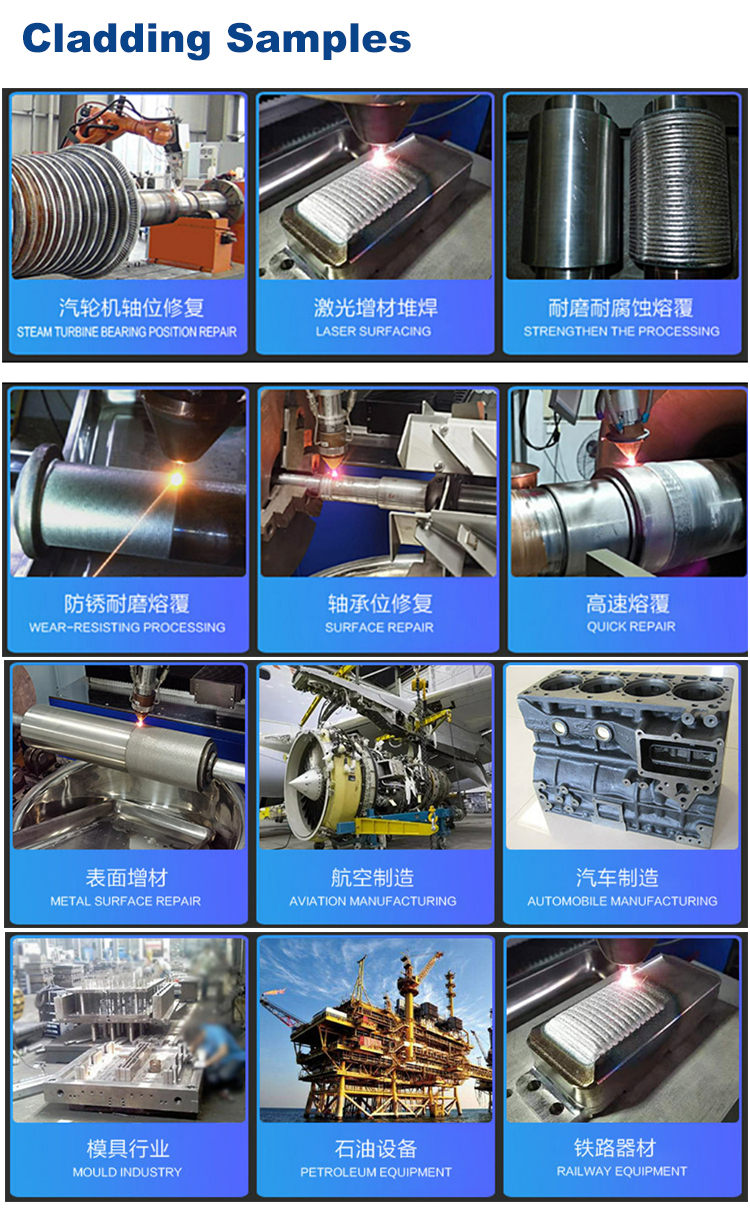
The versatility of our Robotic Arm Laser Cladding Machines makes them ideal for a wide spectrum of industries, including but not limited to:
- Coal Mining Machinery:Repair and surface strengthening of hydraulic support columns, shearer drums, and transmission shafts.
- Power Generation Equipment:Protection and repair of turbine blades, boiler components, and hydraulic shafts in thermal, geothermal , and hydropower plants.
- Petroleum & Chemical:Cladding of valves, wellhead components, and downhole tools for wear and corrosion resistance
- Aerospace & Automotive:Application of wear-resistant and anti-corrosion coatings on critical components, and part repair
- Steel & Metallurgy:Resurfacing of rolls, guides, and other high-wear components in rolling mills .
- Heavy Machinery & Marine:Repair and large-area cladding on large components for construction, shipping, and industrial equipment .
- Mold Manufacturing:Repair of damaged injection molds and die-casting molds, and application of wear-resistant surfaces .
Let’s Find the Perfect Laser Cladding Solution for Your Business.
Contact us today to discuss your specific requirements and receive a tailored equipment recommendation.
Reviews
There are no reviews yet.